How to Test a Pulsed Secondary Ignition Coil Using an Inline Spark Tester London
- Location: London, London, London, United Kingdom
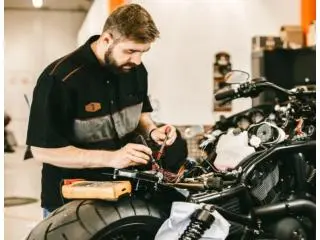
Diagnosing a misfire or a "no-start" condition on a modern motorcycle often leads a mechanic straight to the ignition system, where the secondary coil plays a pivotal role in converting low-voltage battery power into the high-voltage surge required to jump the spark plug gap. Unlike primary circuits, which can be easily tested with a multimeter, the secondary side of a pulsed ignition coil operates at thousands of volts, making it dangerous and difficult to measure directly. An inline spark tester serves as an essential diagnostic window, allowing you to observe the strength, color, and consistency of the spark while the engine is cranking or running under load.
The Physics of Secondary Coil Saturation and Discharge
To effectively use an inline spark tester, one must first understand how a pulsed secondary ignition coil functions as a step-up transformer. The coil consists of a primary winding and a secondary winding wrapped around an iron core; when the pulsed signal from the igniter or ECU interrupts the primary current, the magnetic field collapses rapidly, inducing a massive voltage in the secondary winding. This induced voltage must be high enough to overcome the atmospheric resistance between the spark plug electrodes, especially under the high-pressure conditions found inside a combustion chamber. If the secondary windings have developed internal shorts or high resistance due to heat and vibration, the spark will appear weak, orange, or inconsistent on your tester.
Setting Up the Inline Spark Tester for Safe Diagnosis
The primary advantage of an inline spark tester over the old-fashioned "grounded plug" method is that it maintains a closed loop, protecting both the technician and the sensitive electronics of the motorcycle's ECU from stray high-voltage spikes. To set up the test, you must disconnect the HT lead from the top of the spark plug and insert the tester between the lead and the plug terminal, ensuring all connections are tight and well-insulated. This configuration allows you to see the actual electrical "work" being performed by the coil while the spark plug is still installed in the cylinder head. Learning the safety protocols for handling these high-voltage circuits is a critical component of amotorbike maintenance course, as a stray spark can jump several inches and cause painful shocks or damage to electronic ignition modules. By keeping the tester "inline," you are also ensuring that the coil is under a realistic load, which is necessary for detecting intermittent failures that only occur when the coil is hot or vibrating at high RPMs.
Interpreting Spark Color and Frequency under Cranking
Once the tester is securely in place, you can observe the spark while hitting the starter button or using the kickstart to cycle the engine. A healthy pulsed secondary coil should produce a crisp, rhythmic "snap" accompanied by a bright blue or white spark that is easily visible even in daylight. If the spark is rhythmic but faint, it suggests that the coil is losing its ability to hold a charge or that the secondary insulation is breaking down internally. On the other hand, a spark that "stutters" or skips beats indicates a problem with the pulsing signal from the pick-up coil or the CDI unit itself.


Useful information
- Avoid scams by acting locally or paying with PayPal
- Never pay with Western Union, Moneygram or other anonymous payment services
- Don't buy or sell outside of your country. Don't accept cashier cheques from outside your country
- This site is never involved in any transaction, and does not handle payments, shipping, guarantee transactions, provide escrow services, or offer "buyer protection" or "seller certification"
Related listings
-
 AC PCB Repairing Course | AC Repairing Course | Multitech InstituteEducation - Training - New Delhi (Delhi) - April 25, 2026
Join the AC Repairing Course at Multitech Institute in Delhi, where we provide hands-on training and expert guidance. With experienced trainers, state-of-the-art equipment, and real-world practice, Multitech Institute is your go-to destination for AC...
-
 mep course in kozhikodeEducation - Training - Calicut (Kerala) - April 25, 2026
Join an internationally certified MEP course in Kozhikode at Axionz Group of Institutions. The program offers certifications from reputed organizations such as SDC Canada, adding global value to your career. Students learn HVAC design, e...
-
 Law Assignment Helper UKEducation - Training - London (London) - April 25, 2026
UK Law Assignment Writing Service offers students professional assistance with their assignment needs throughout the United Kingdom (London, Manchester, Birmingham, Leeds, Bristol, Glasgow). The Law Assignment Writers UK Team consists of re...